
A resin bound drive is decorative aggregate and clear resin mixed together and trowelled out into one seamless surface. No loose stone underfoot, no ruts, no weeds through the joints — and rainwater goes straight through it instead of running out onto the road.
Pure Lay Home Solutions lays resin bound driveways, patios, paths and hardstanding across Fleet, Hampshire, Pagham and West Sussex — on a base built to carry it, in the colour you choose.
Water drains through, not onto the road.
The base decides how long resin lasts.
Itemised price after a site visit.
Hampshire and West Sussex based.
The names are nearly identical and the prices are not, so this is worth two minutes of your time before you compare quotes. Some of the cheaper resin quotes you receive will be for the bonded system, not the bound one, and the two behave completely differently once they are down.
Aggregate and resin are mixed together in a forced-action mixer first, then trowelled out as one material. The finish is smooth and flat, every stone is locked in, and the surface stays porous so water drains straight through it. This is what we recommend for almost every driveway.
Resin is spread on the surface first and loose stone is scattered over the top, so only the bottom of each stone is stuck down. It is quicker and cheaper, and the rough finish grips well on a slope — but it sheds stone for the life of the drive and it is not permeable.
We lay both. Bonded has its place on a steep slope or a ramp where the extra grip genuinely matters. Everywhere else, bound is the better surface and the one that keeps you clear of the drainage rules further down this page. If a quote you are comparing does not say which system it is, ask.
Resin bound is not only a driveway surface. Anywhere you want a firm, level, seamless finish with no loose stone to kick about, it earns its place — for homes and for businesses across Hampshire and West Sussex.
The main event. A smooth, flat drive with no loose chippings to track into the house, laid in the colour and blend you choose and finished neatly against your existing kerbs and borders.
A seamless seating area with no joints to weed and nothing to wobble underfoot. It ties in well against porcelain, slabs or a lawn edge, and it drains rather than puddling.
Front paths, side access and garden routes. Resin follows a curve without any cutting, which is why winding paths look far better in resin than in blocks or slabs.
Garage aprons, parking bays, bin and bike stores and commercial hardstanding — laid at the right depth for the traffic that will actually run over it.
No loose stone to end up in the water, a surface that does not hold puddles, and an anti-slip aggregate option where the area gets wet regularly.
Shared parking, entrances, school and care-home paths. Resin bound gives a level, wheelchair and pushchair-friendly surface with no trip edges.
Colours look completely different on a screen. We bring the sample board out to you, hold it against your brickwork and let you pick in the light it will actually live in.
This is the part that separates a resin drive still looking new in fifteen years from one cracking in its third winter. Resin bound is a wearing course, not a structure — it is usually laid 15 to 18mm thick, and 18mm is what we use anywhere a car will run. At that thickness it takes its shape and its strength entirely from whatever is beneath it.
So a resin quote is really a quote for two things, and the cheap ones are cheap because they skip the first.
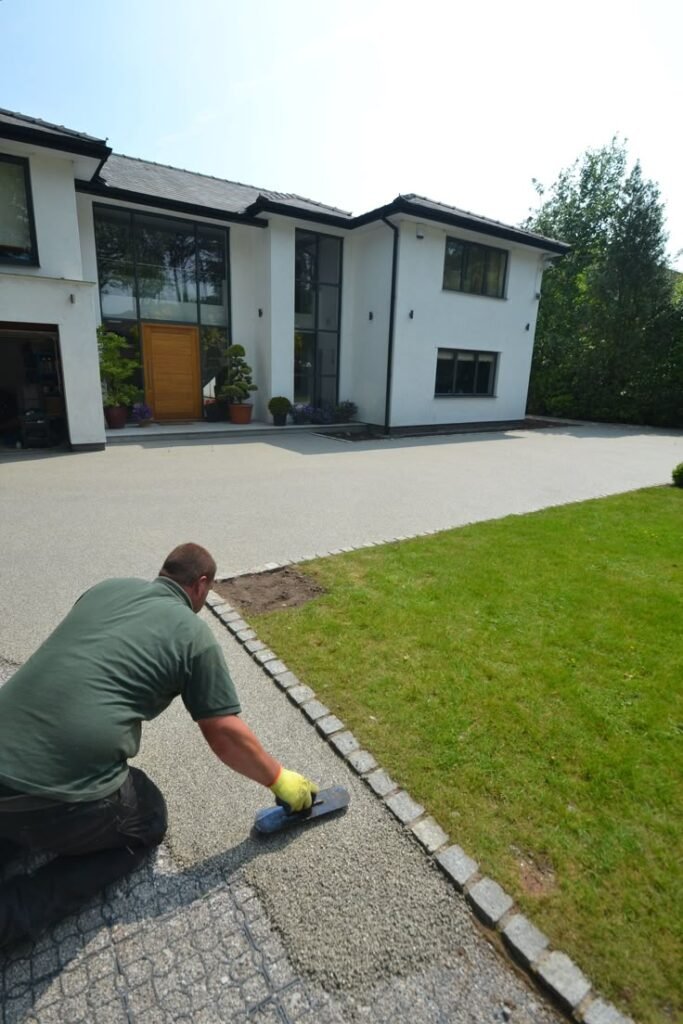
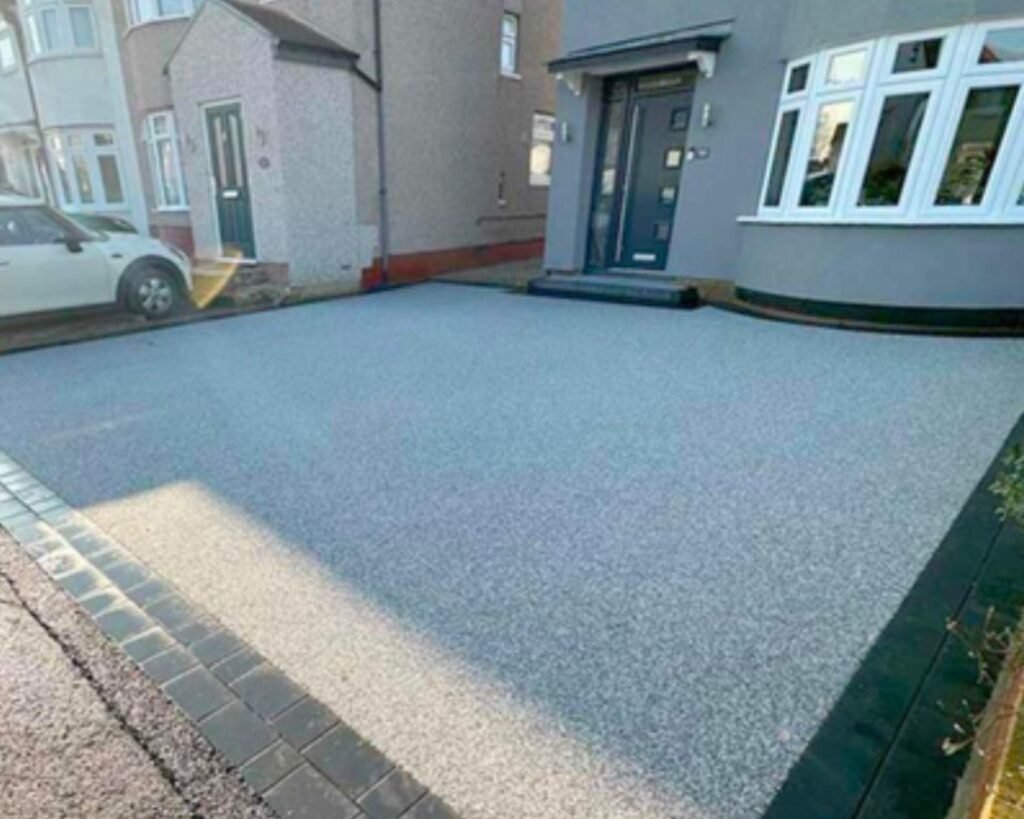
Where there is nothing suitable to build on, we excavate and lay an open-graded permeable base with a binder course over it. More work and more cost, but it is the build that keeps the finished drive porous and stable.
Sound tarmac or concrete can be overlaid, and it is the quickest route to a new drive. It has to be structurally solid, free of movement and falling the right way — we check that on site rather than assume it.
What we will not do is lay resin over a surface that is already failing. Resin bound is thin and flexible; it copies the base. Every crack, dip and rocking slab underneath will come through the new surface, usually within a year, and at that point the only fix is to take the whole thing up again.
The aggregate is the whole look of the surface, and there are hundreds of blends. Rather than scroll through a website, the useful thing is to narrow it to a family first and then look at real samples against your own brick and render.
One honest note on colour: very pale blends look superb on the day and show tyre marks and leaf staining sooner than the mid-tones do. They clean up, but they need cleaning more often. If the drive gets heavy use we will usually steer you toward a mid-tone blend and say why.
Most domestic drives are a two to four day job once the base is sorted, and the resin itself goes down in a single day. The sequence matters because resin has a working time measured in minutes.
We measure up, check falls and drainage, and establish whether your existing surface can be overlaid or whether the ground needs excavating and rebuilding. That answer sets the price.
Either a new permeable build-up, or the existing surface cleaned, repaired and primed. Edges are formed, levels checked and any drainage channels set to their finished height.
Aggregate and resin are batch-mixed on site in a forced-action mixer, barrowed straight out and hand-trowelled to an even depth while it is still workable. No breaks mid-area — that is what causes visible joins.
We tape it off and leave it to cure. You can normally walk on it the same day, and drive on it after 24 to 48 hours depending on the weather. Site swept, spoil away, aftercare explained.
Resin bound is a porous material. Since 2008, paving more than five square metres of a front garden with a surface that water cannot pass through, where the run-off simply goes onto the road, needs planning permission. Resin bound is usually how people stay the right side of that rule.
There is a catch worth knowing, because it is the thing most often glossed over in a quote.
Laid on an open-graded permeable build-up, water passes through the resin, through the base and into the ground. The whole system drains, and this is the SUDS-compliant version.
Overlay the same resin onto sealed concrete and the surface is still porous, but the water has nowhere to go once it is through. It will sit or run off at the edge unless drainage is designed in.
Where we overlay an existing impermeable surface — which is often the sensible, cheaper option — we deal with the water deliberately: a channel drain across the threshold, a fall into a border or soakaway inside your boundary, or a permeable margin. Your quote will state which. If we think a job genuinely needs permission, we will tell you before we start rather than leave you with it afterwards.
Resin bound looks like a simple product and it is an unforgiving one to install. The material gives you minutes, not hours, and the preparation underneath is invisible by the time you see the finished drive.
We are a paving and landscaping firm first. The excavation, levels and base are done by our own team, which is exactly where resin installations tend to go wrong.
The price states the base build-up, the depth of resin, the aggregate and how the drainage is handled — so you can compare quotes properly instead of by the bottom line.
If your existing base is not fit to overlay, or a mid-tone blend will wear better than the pale one you liked, we say so at quote stage rather than after.
Resin work is messy while it happens. Spoil taken away, the road and pavement swept, and clear tape and instructions left so nobody walks on it too early.
Golds, greys, charcoals and natural blends — a look at the range of finishes a resin bound surface can be laid in. Bring us a photo of a drive you like and we will tell you which blend it is.
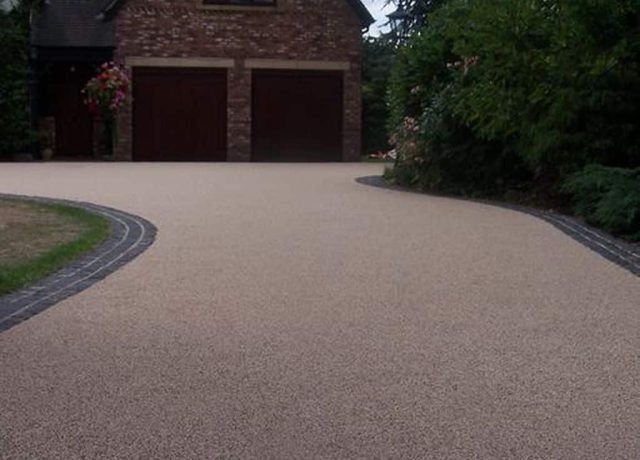
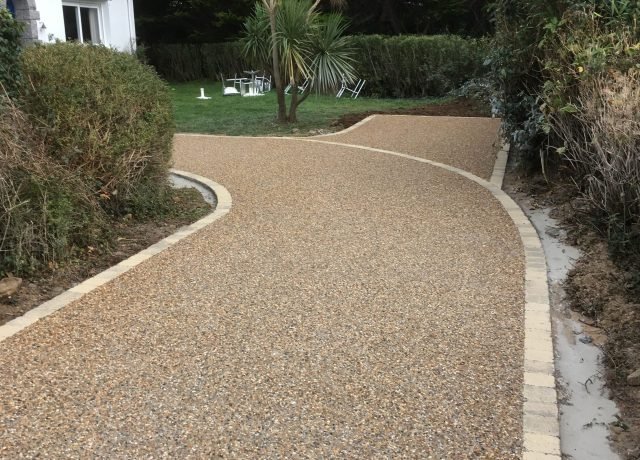
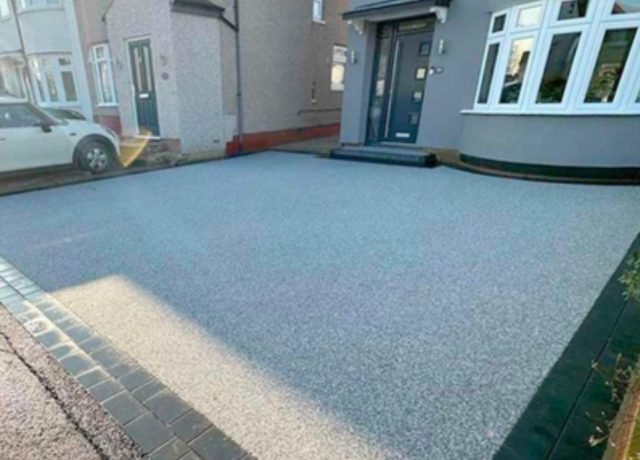
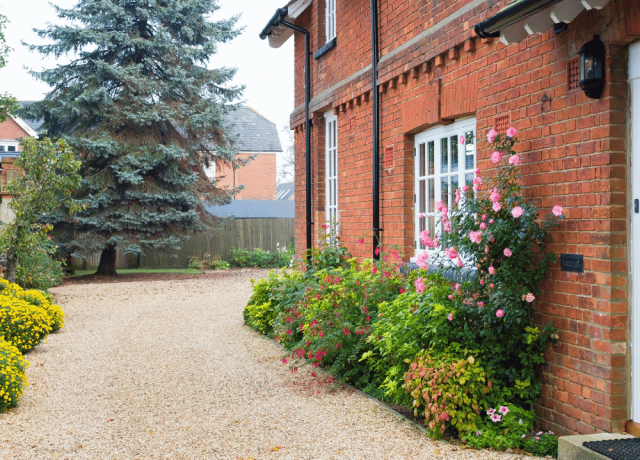
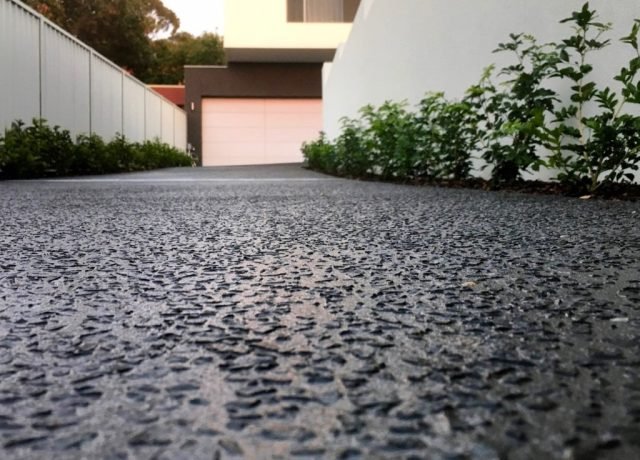
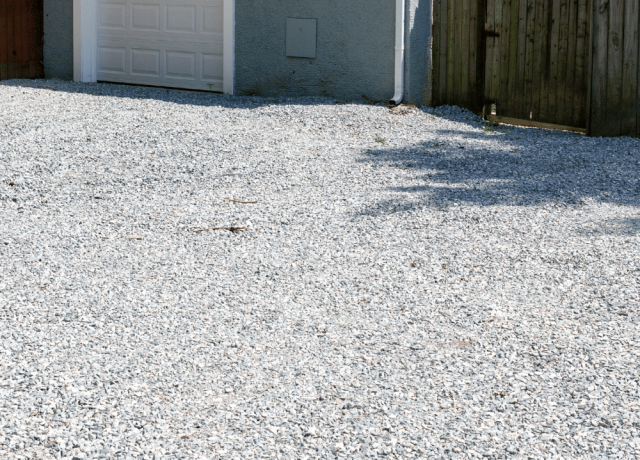
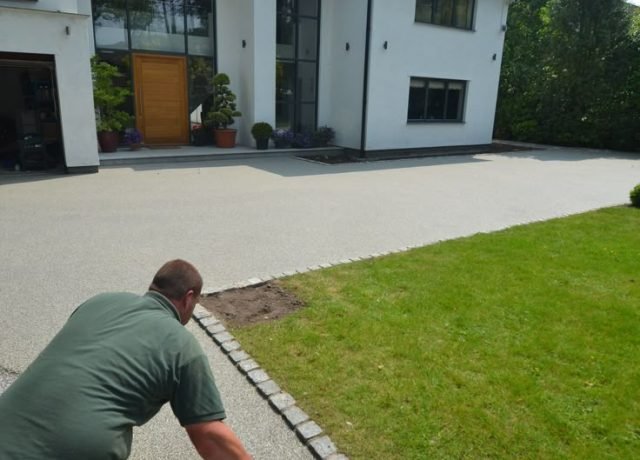
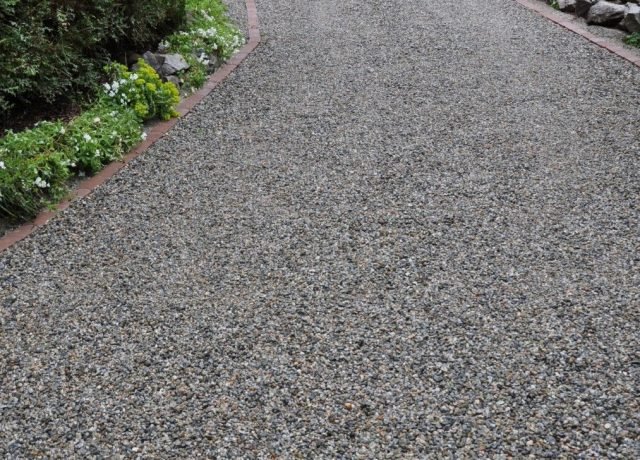
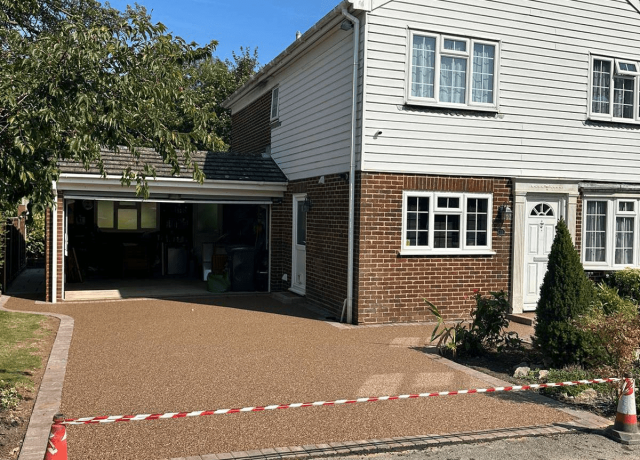
It is priced per square metre, and the rate turns almost entirely on the base. Overlaying a sound existing drive is the cheaper end. Excavating, carting away and building a new permeable base underneath costs considerably more, because it is considerably more work.
The aggregate you choose moves the figure too — some blends cost noticeably more than others. We measure up and give you an itemised price rather than a rate over the phone.
The resin itself is usually a single day. What varies is everything before it: an overlay onto a sound surface can be a two-day job, while a full dig-out and new base is more like three to five days.
Resin also needs dry conditions and a workable temperature to go down, so we will not lay it in the rain. We would rather move a date than lay a drive that cures badly.
You can normally walk on it the same day, usually about six hours after it is laid. Vehicles should stay off for 24 to 48 hours depending on temperature — colder weather means longer.
We tape the drive off and tell you the exact times before we leave, so you can arrange parking for a day or two.
Very little. Brush it, and wash it down with a hose or a pressure washer on a wide fan setting held well back. Do not attack it with a turbo nozzle at close range — that is the one thing that will damage the surface.
Weeds are rare because there are no joints, though windblown seed can occasionally take hold in surface debris. Keeping it swept deals with that.
Clear answers to the questions we are asked most often about resin driveways, what they cost to run and what the work involves.
Natural aggregate and a clear resin binder are mixed together before they go down, then trowelled out over a prepared base to a set depth — usually 18mm where cars will run. The result is one continuous surface with no joints, no loose stone and enough porosity for water to pass through it. It is a wearing surface rather than a structure, which is why what sits underneath matters so much.
Resin bound is mixed first and trowelled flat: smooth, fully locked in and permeable. Resin bonded has the resin spread on the surface with loose stone scattered over it, so only the underside of each stone is fixed. Bonded is quicker and cheaper and grips well on a slope, but it sheds stone for the life of the drive and it is not permeable. We lay both and recommend bound for almost every driveway.
Laid properly on a sound base, fifteen years and upwards is a reasonable expectation, and many last considerably longer. The resin itself is durable — what shortens the life of a resin drive is almost always the base beneath it moving, cracking or holding water.
Often, yes — sound tarmac and concrete both make good bases, and overlaying is quicker and cheaper than a full rebuild. It has to be structurally solid, stable and falling the right way. If the existing surface is cracked, sinking or rocking we will tell you, because resin is thin enough to copy every defect underneath it within a year or so.
Usually not. Since 2008, paving over five square metres of front garden with an impermeable surface that drains onto the road requires permission, and a resin bound surface laid over a permeable base is one of the standard ways of staying outside that. Note that overlaying sealed concrete gives you a porous surface over an impermeable base — so the drainage still has to be designed in. We will tell you which applies to your property at survey.
Not from underneath — there are no joints for them to come up through, which is the main practical advantage over block paving and gravel. Occasionally a seed lands in debris on the surface and roots there. Sweeping and the odd wash-down is the whole of the maintenance regime.
Yes. A damaged patch can be cut out and a fresh batch laid in. Be aware that a repair is rarely completely invisible: the new resin will look slightly different until it has weathered in, and aggregate batches vary a little. We keep a record of the blend used on your drive so a future repair can be matched as closely as possible.
The surface has natural texture and drains quickly, so it is not slippery in normal use, and we can specify an anti-slip aggregate for slopes and pool surrounds. On fading, use UV-stable resin — standard resin can yellow over time and it shows most on pale blends. It is worth checking which one a quote is based on.
We work across Fleet, Farnborough, Aldershot, Camberley, Basingstoke and the wider Hampshire area, and from our Pagham base across Bognor Regis, Chichester and West Sussex. If you are not sure whether you are in range, call and ask.
Book a free site visit and we will check the base, bring the aggregate samples out to you, sort out the drainage question and put a fixed itemised price in writing — across Fleet, Hampshire, Pagham and West Sussex.
Elvetham Bridge Unit 1, Fleet, GU51 1AE
Copyright © [year] Pure Lay Home Solutions. All Rights Reserved.