
Almost every fence that blows down in a February gale fails in the same place — at ground level, where a timber post has quietly rotted through. The panels are usually fine. It is the posts that go.
Pure Lay Home Solutions installs close-board, panel, post-and-rail and slatted fencing across Fleet, Hampshire, Pagham and West Sussex, on concrete posts with gravel boards, set properly into the ground.
The part that rots, taken out of the equation.
Timber kept clear of wet soil.
Straight runs, even gaps, consistent heights.
Itemised price after a site visit.
Pull down a fence that has failed and you will nearly always find the same thing: sound panels, sound arris rails, and a timber post that has rotted away in the 150mm either side of ground level. That band is where timber is alternately soaked and aerated, which is exactly the condition rot needs. Everything above it is still perfectly good, and useless, because it has nothing to hang from.
So the honest way to quote a fence is to be clear about what the posts are, how deep they go, and what sits between the timber and the soil. Those three things decide whether you are buying ten years or twenty-five. The panel style is the part you will enjoy looking at; the post spec is the part you are actually paying for.
If you specifically want timber posts — for looks, for a listed property, or to match an existing run — we will fit them and say so plainly on the quote, including what that does to the expected life. What we will not do is quote timber posts without mentioning it and let you find out in eight years’ time.
Different boundaries want different fences. A roadside run, a back garden overlooked on two sides, a paddock edge and a contemporary patio screen are four different jobs, not one product in four heights.
Feather-edge boards nailed vertically onto arris rails and built in place, not delivered as a panel. The strongest and longest-lived domestic fence, and the right answer for an exposed or roadside boundary.
Waney-edge or square-lap panels dropped between concrete posts. Quick to fit, easy to replace one panel at a time, and the most cost-effective way to enclose a standard rear garden.
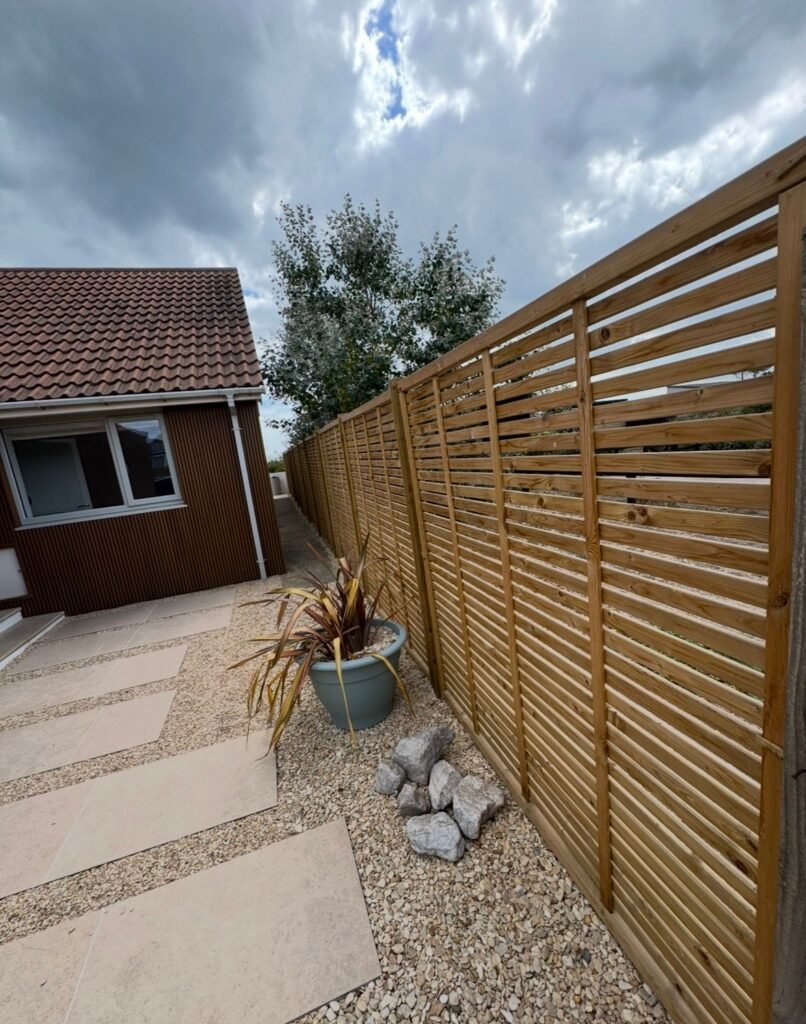
Horizontal slats with a deliberate shadow gap — a cleaner, more architectural look that suits a modern patio or a garden room. Also works well as a screen rather than a full boundary.
Cleft or sawn rails morticed into posts. The traditional choice for paddocks, orchards, driveways and open frontages where you want a boundary marked without losing the view.
Low painted or stained picket for front gardens and cottage boundaries, where the fence is there to define the edge and look right rather than to block anything.
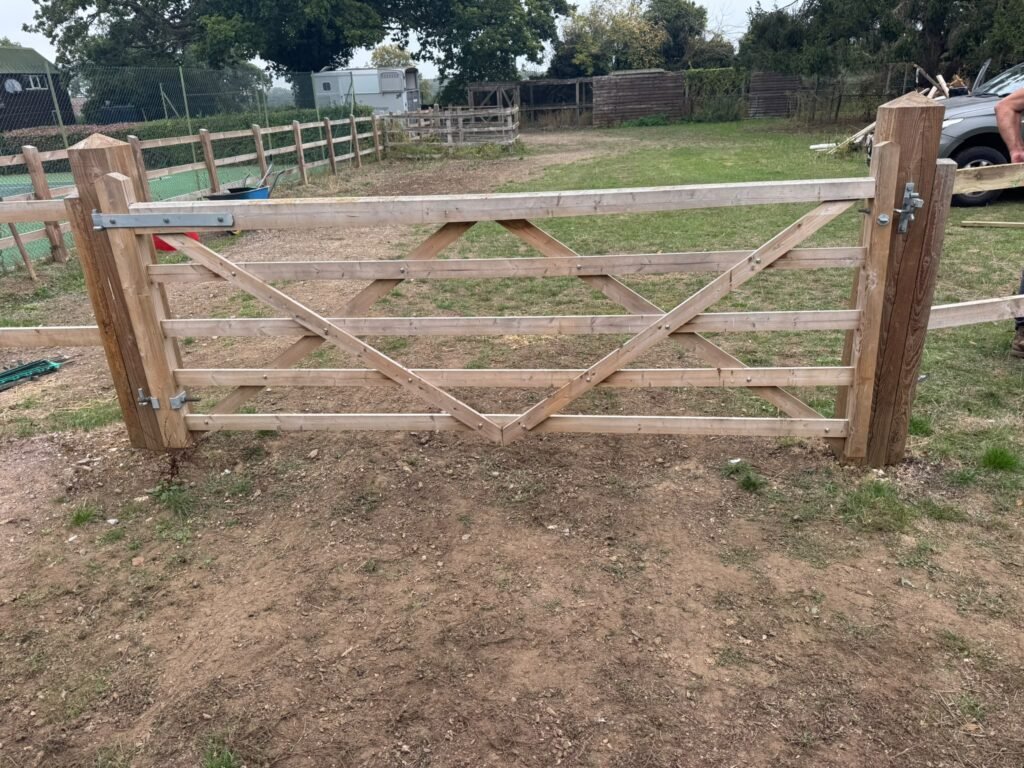
Matching side gates, double gates and five-bar field gates, hung on posts sized for the weight and fitted with galvanised or black-ironmongery hardware that will still swing true in five years.
Send a photo or book a free site visit. We will tell you what is there now, what is salvageable, what the ground is like, and what it will cost — in writing, itemised, with no obligation.
Five stages, and none of them get skipped to hit a price.
We walk the boundary with you, agree exactly where the line runs, check for services, look at ground conditions and note anything — tree roots, a slope, a neighbour's structure — that changes the method.
The old fence comes out, including the post stumps and the old concrete. We take it away rather than stacking it at the bottom of your garden.
Post holes dug to depth — deeper for taller fences — posts set plumb in concrete on a stone base, strung to a line so the run is straight and the tops are level.
Gravel boards in first, then panels or feather-edge fixed with galvanised nails and screws. Heights stepped cleanly where the ground falls, rather than left to follow the slope raggedly.
Post caps and capping rail fitted, gates hung and adjusted, everything checked along the line, spoil and old timber removed, and the ground left swept.
We go along the finished run together before we leave, so anything you are not happy with gets dealt with while we are still on site with the tools out.
If three panels have gone and the rest of the run is sound, replacing the whole boundary is a waste of your money. We repair as readily as we replace, and we will tell you which one your fence actually needs.

One honest caveat about matching: fence timber weathers to silver-grey within a couple of seasons, so a new panel in an old run will look new for a while. There is no way around that other than waiting. If the difference would bother you, replacing a whole side rather than two panels in the middle of it usually reads better.
Fencing is the one trade where the awkward conversation is usually not about the work. It is about the line. Worth knowing before you commit:
Under permitted development a fence can generally go to 2m, dropping to 1m where it fronts a road or footpath. Above that you are into planning permission. Listed buildings and conservation areas have their own rules.
Your deeds or title plan show the boundary; the T-marks show who is responsible for it. If it is genuinely unclear, that is a conversation to have with your neighbour before we dig, not after.
Convention gives the smooth face to the neighbour and the rails to you. It is custom rather than law, and close-board can be built either way — but it is worth agreeing rather than assuming.
We check for roots and buried services before digging post holes. Where a root makes a hole impossible we move the post and adjust the bay rather than cut through it.
Based in Fleet, Hampshire and Pagham, West Sussex. The people who quote the job are the people who turn up to do it.
Posts, boards, panels, gates, removal and disposal listed separately so you can see what you are paying for and change it.
Old timber and concrete taken away, driveways and lawns protected, and the site left safe at the end of each day.
Close-board runs, panel boundaries and garden screens completed for homeowners across Hampshire and West Sussex.
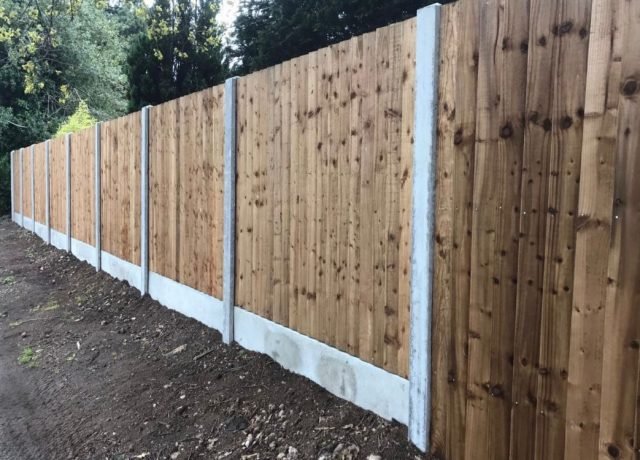
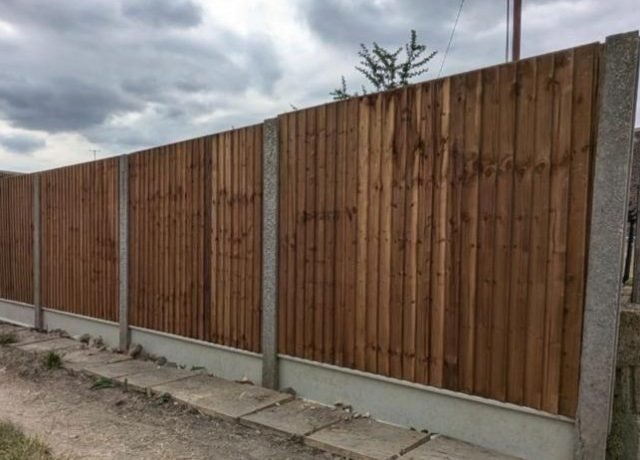
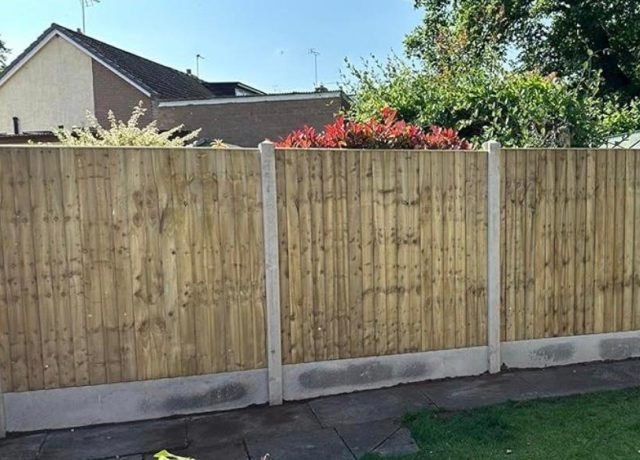
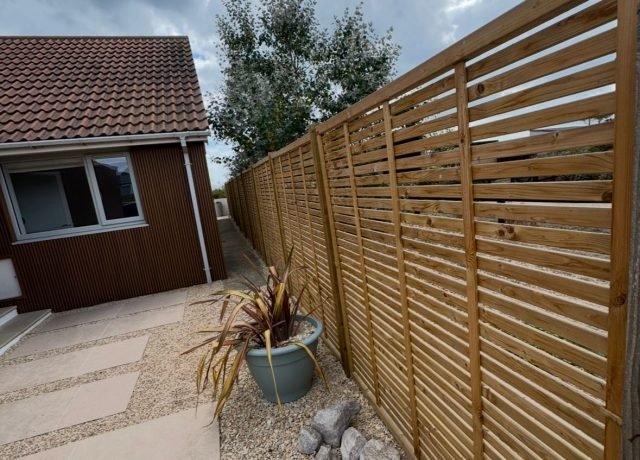
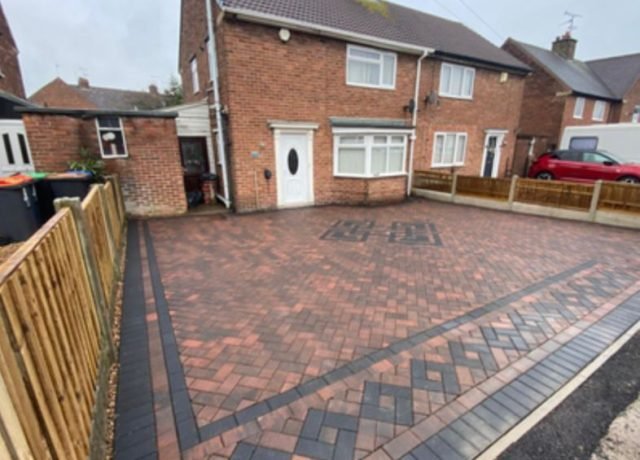
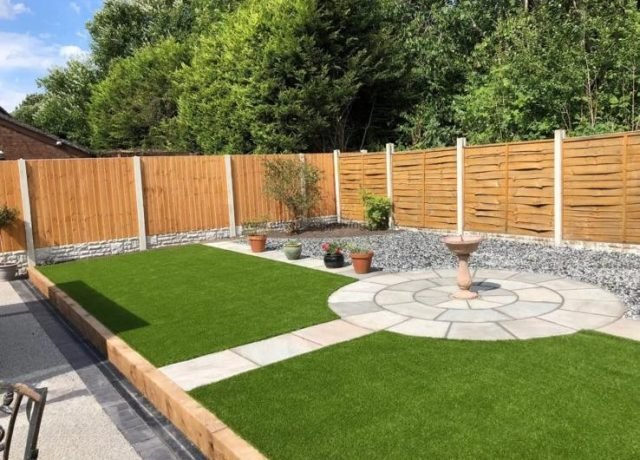
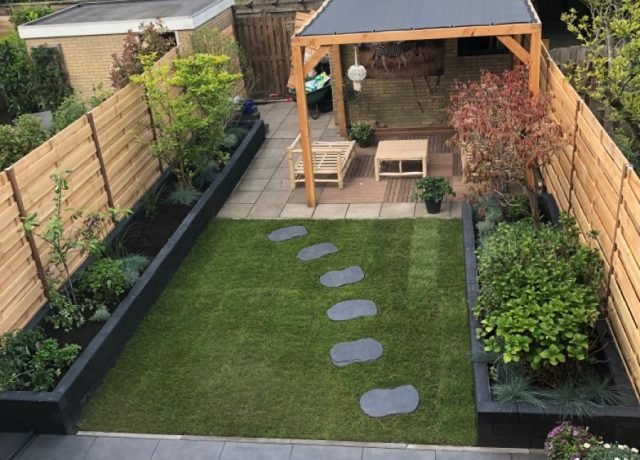
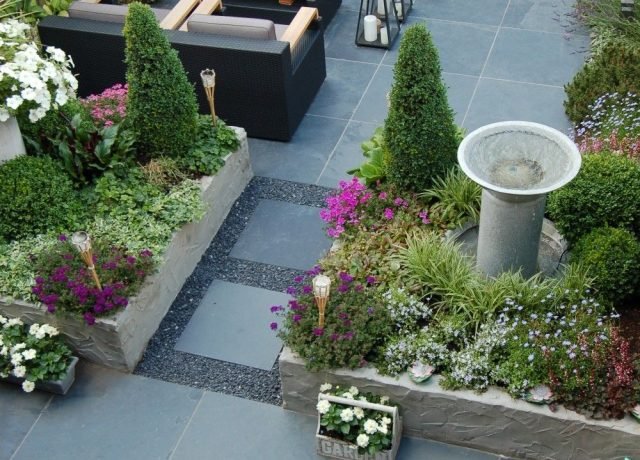
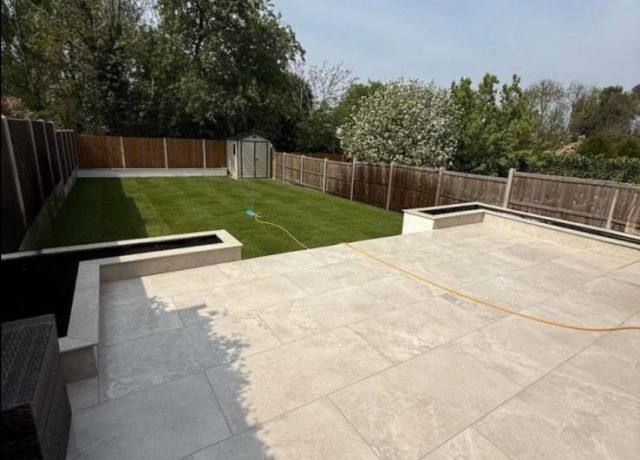
Fencing is priced per metre of run, and the two things that move the figure most are the post specification and what has to come out first. Close-board on concrete posts costs meaningfully more per metre than lap panels on timber — and lasts roughly twice as long, which is the trade you are actually making.
After that it is height, gates, ground conditions, access for a post-hole auger, and disposal of the old fence. We measure the run and give you an itemised figure rather than a rate over the phone.
A typical rear garden boundary — fifteen to twenty metres, old fence out, concrete posts, gravel boards, panels — is usually one to two days on site.
Close-board takes longer than panels because it is built board by board in place. Add gates, a difficult slope, hard ground or awkward access and it stretches. The post concrete wants a day before anything heavy hangs on it, which is why gates are often hung on the second visit.
On concrete posts with gravel boards, expect twenty to twenty-five years from a close-board fence and around fifteen from good panels, with the panels being the part you eventually swap.
On timber posts, ten to fifteen years is realistic, and the posts will be what fails. That gap is the whole argument for concrete, and it is why we quote it as standard.
Pressure-treated timber does not need annual treatment to survive — it is treated through, not painted on. What treatment buys you is colour: left alone, fence timber silvers off to grey within two or three seasons.
If you want it to stay brown or go a particular shade, a coat every two to three years on a dry week does it. That is a preference, not maintenance.
Clear answers to the questions we are asked most often about fence types, posts, heights and boundaries.
Concrete, in almost every case, and it is the single most important choice on a fencing job. Timber posts rot at ground level, where they are alternately wet and aerated, and when they go the whole fence goes with them even though the panels are still sound. Concrete posts remove that failure point entirely and let you swap a damaged panel out in ten minutes without touching the structure. Timber posts look better, and for a low picket or a rustic post-and-rail run they are often the right call — but for a boundary fence you want to stop thinking about, concrete wins.
The working rule is a quarter of the above-ground height, with a minimum of around 600mm. So a 1.8m fence wants roughly 600mm in the ground, and a 2.4m run or a gate post wants more. The hole is dug wider than the post, a stone base goes in the bottom so water can drain away rather than sit around the foot, and the post is set plumb in concrete. Shallow post holes are the most common corner-cut in fencing and it is invisible until the first real gale.
A gravel board is the board that runs along the bottom of the fence, between the panel and the ground. Its job is to keep the panel timber out of wet soil — and to be the cheap, replaceable part that rots instead of the expensive one. Concrete gravel boards last effectively forever; timber ones are cheaper and swap out easily. Either way, yes, you want them. A panel sat directly on soil will wick water up into itself and fail years early.
Generally up to 2 metres, dropping to 1 metre where the fence adjoins a highway used by vehicles or a footpath alongside it. Those limits include any trellis on top. Listed buildings, conservation areas and properties with removed permitted development rights are exceptions, and a few newer estates have covenants that cap fence heights regardless of planning. We flag anything we think applies at survey, but the deeds are the definitive answer.
Your title plan shows the boundary, and the T-marks on it show which side owns and maintains each stretch — the T sits on the owner’s side. If there are no T-marks, there is no legal default, despite what people will tell you about it always being the left-hand or right-hand boundary. Where ownership is genuinely unclear, the practical route is a conversation with your neighbour and often a shared cost, settled before we start rather than after the posts are in.
It is convention, not law. The smooth face goes outward and the rails face the owner. Most people follow it because it avoids an argument, and because a fence with its rails exposed to the street looks unfinished. With close-board we can build it either way, and with double-sided panels the question does not arise at all. Worth deciding before we order rather than after.
Yes, and there are two approaches. Stepping keeps each panel level and drops the run in increments, which looks crisp and is the usual choice for panels, with the triangular gaps under each bay closed by gravel boards. Raking follows the slope continuously, which needs close-board built in place rather than prefabricated panels. On a gentle fall, stepping. On a steady long slope, raking usually looks better. We will show you both at survey.
Yes, and often that is what we recommend. If the posts are concrete and sound, swapping two or three panels is quick and cheap. If the posts are timber and one has gone, the others in that run are usually close behind, so replacing panels alone is throwing good money after bad — we would say so rather than take the smaller job. Where a timber post is leaning but not rotten through, a concrete repair spur bolted alongside is a genuine fix, not a bodge.
Yes, including the post stumps and the old concrete, which is the part most quotes quietly leave out. Old fencing is bulky and treated timber cannot go in a household bin, so disposal is a real cost — it appears as its own line on our quote so you can see it rather than discover it.
Yes — side gates, double gates and five-bar field gates, made to match the fence. The thing that matters on a gate is the post: a gate is a lever, and a post sized for a panel will pull over within a year or two. We use a heavier post set deeper for gates, with galvanised or black ironmongery. If a gate drops, it is nearly always the post that moved, not the hinges.
Fleet, Farnborough, Aldershot, Camberley, Basingstoke and the wider Hampshire area, and from our Pagham base across Bognor Regis, Chichester and West Sussex. If you are not sure whether you are in range, call and ask.
A new boundary changes how the rest of the garden reads. If the lawn, the paving or the drive are on the list too, doing them together saves a second set-up and lets the levels work with each other rather than against.
Book a free site visit and we will walk the boundary, check the ground, measure the run and put a fixed itemised price in writing — across Fleet, Hampshire, Pagham and West Sussex.
Elvetham Bridge Unit 1, Fleet, GU51 1AE
Copyright © [year] Pure Lay Home Solutions. All Rights Reserved.